Organization

RI-Solution GmbH is the full-service IT provider for the BayWa concern.
BayWa AG is a global business focused on the areas of trading, logistics, and services in the agriculture, energy and construction sectors. Outside of Europe, the bulk of its international activities are in the USA and New Zealand.
The majority of BayWa’s turnover comes from agriculture, including agricultural production, sourcing, and marketing of plant products all the way from the field to the industries that process them. Beyond its primary geographical market in Germany and Austria (RWA), BayWa is internationally active and ranks among the top 10 largest agricultural traders in the world. The Agricultural Equipment business unit distributes machines, equipment, and accessories. The Energy business unit represents the second largest segment of the company, involving the supply of heating oil, diesel, wood pellets, and lubricants as well as the operation of many fuel stations. The second important part of this unit is the area of renewable energy; the company has a 100% involvement in BayWa r.e GmbH, which involves wind, solar, and bioenergy. The Construction business unit is involved in the sale of construction materials.
Due to its size and the impressive breadth of its offerings, the organization relies on highly reproducible processes and solutions.
RI-Solution is the full-service IT provider for around 17,000 worldwide BayWa employees. More than 250 IT professionals are responsible for implementing and maintaining the applications, networks, and infrastructure that drive critical workflows in the BayWa organization.
Importance of Documents at BayWa
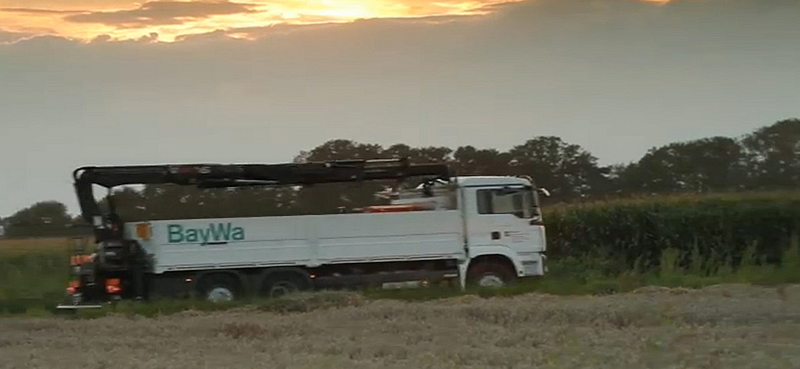
With more than 3,000 locations in 28 countries, BayWa AG reported 2013 revenues of around 16 Billion Euros. Among these locations are warehouses, workshops, distribution terminals for liquid and solid fuels as well as other facilities that directly serve BayWa customers. “This may involve farmers buying a new tractor or getting another one repaired, or construction crews picking up building supplies, or even a regular homeowner buying a shovel,” says Matthias Arth, Data and Information Lifecycle Leader at RI-Solution. “But one thing they have in common is that they are busy people with no time to wait around for a printed invoice or a service order. They just want to pick up their shipment and get back to work, which they cannot do if a key document fails to print.” From price quotes to purchase orders, delivery notes, invoices and more, BayWa employees rely on a variety of printed documents to do their jobs every day. Most of these documents are generated by SAP applications running at the main RISolution data center in Munich, Germany.
SAP Document Challenges
“We’ve got over 30 SAP systems running in our environment, all of which are critical to the business processes at BayWa and its partners,” explains Mr. Arth. These include retail (IS), financial and controlling (FI/CO), materials management (MM), sales & distribution (SD), and more. Previously, Mr. Arth’s team relied on native SAP printing from these applications. “We developed an in-house solution based on UNIX/Linux queues and CUPS that worked with the native SAP Spool using the local print or type ‘L’ connection,” he explained. Whenever a user department experienced an issue related to printing from an SAP application, one or more of the Basis administrators would be called away from their duties to sort through various queues and spools to diagnose the problem. More problematic than the complexity of this solution was the archaic, labor-intensive nature of the spooling systems architecture. “The system was hard-coded to the old PCL standard for Latin 1 fonts, and thus unable to handle the new languages and fonts we needed to print documents in overseas branches.” With the expansion of BayWa in growing markets, the RI-Solution team knew they needed a more scalable printing solution that leveraged the built-in Unicode and GOF support in newer SAP releases. They also wanted to eliminate the development burden of coding changes and custom scripts.
Search for a Solution
“We looked around the market for external output management solutions that met our most important criteria: Unicode/GOF support, scalability, and ease of administration,” said Mr. Arth. “We also needed a product that was certified compatible with our SAP applications, as they are strategic to our business.”
The team narrowed their list to three alternatives and began the long process of evaluating each solution. However, VPSX output management software from LRS showed several advantages from the earliest stages of the trial. The solution was fully customizable and featured a simple web interface. Compared to the alternatives, it also proved easy to install and configure.
According to Mr. Arth, “The engineers from LRS came on a Thursday morning, and the basic installation was done in about half a day. Then we did some customizing — integrating VPSX with our Active Directory domain, etc. By the end of the next day, it was completely configured and we could start sending SAP output to printers in BayWa locations.”
By the Numbers (2013, including associates):
Industry
Construction materials, Agriculture, and Energy
- BayWa & RWA employees: around 17,000
- Annual revenues: €16 billion
- Locations: 3,000 in 28 countries
- Average print jobs: 1.6 Million jobs / month
- Average print volume: 2.8 Million pages / month
- Number of printers: approximately 5000
- Number of VPSX administrators: 2
- VPSX servers deployed: 2 Production, 1 Test

Output Management in Action
Unlike many organizations, Mr. Arth’s team chose to directly implement each new VPSX printer into their production environment with live data. “We identified a few key users in each department and made sure they quickly notified us of any problem they experienced. The rollout revealed a few issues related to older hardware that didn’t support modern protocols. These were problems we would not have found in a test environment.”
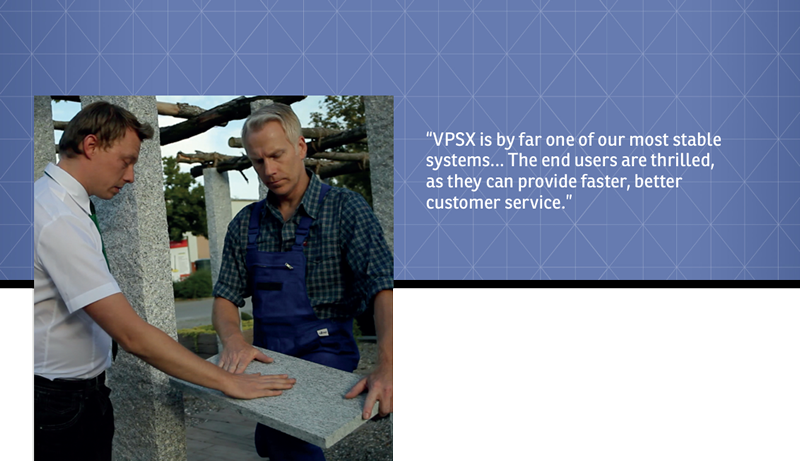
Since installing the LRS® software, the company’s SAP Basis team no longer spends time diagnosing and solving print issues. Nearly all document problems are handled by firstlevel help desk staff in the field, with second-level backup from Mr. Arth and one other colleague. “VPSX is by far one of our most stable systems,” said Mr. Arth. “When you talk about actual downtime situations involving VPSX, we’ve never had one yet. Of course there are hardware failures that the software cannot prevent, but VPSX helps us find and solve them quickly. The end users are thrilled, as they can provide faster, better customer service.”
DOWNLOAD (PDF)